

Dear fellow travellers,
I’m writing this from the temple office after what I can only describe as an emotional nosedive. Three days ago, I felt like I was finally moving forward. I’d had good days. I wasn’t crying every morning. I was making plans that didn’t include her. I thought, “Maybe I’m actually healing.”
Then yesterday, I walked outside on my day off.
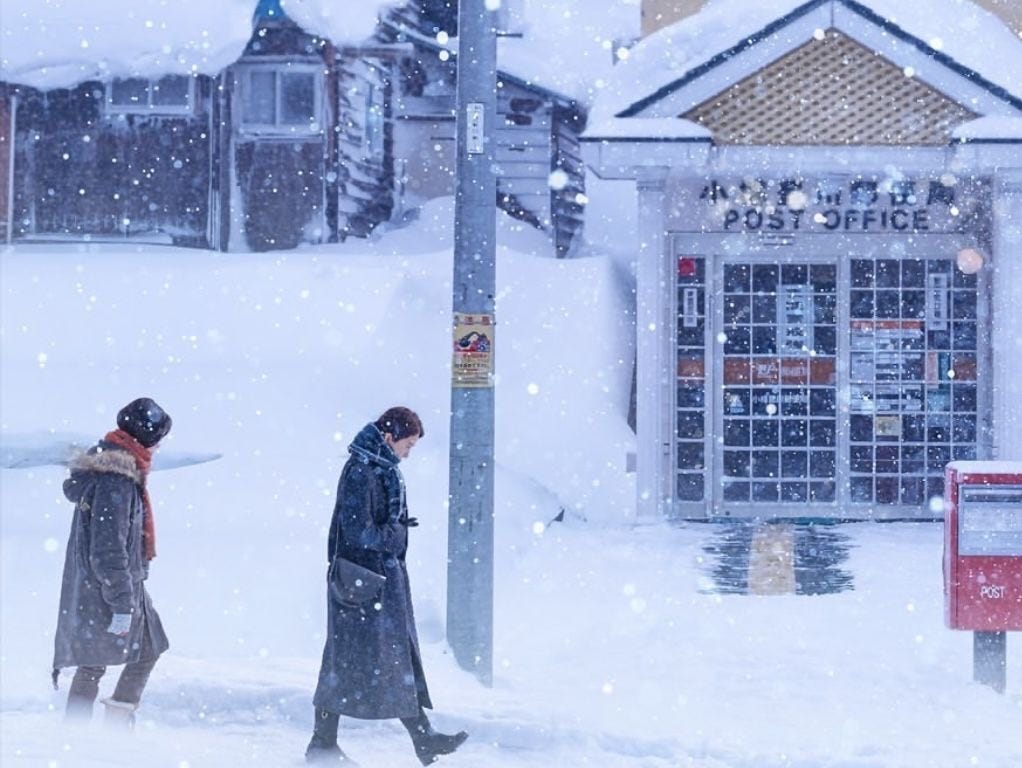
The air was cold. That specific kind of cold that signals winter is coming. And suddenly I was right back there—not to August, but to Christmas two years ago. To her favourite movie. To a memory I didn’t even know would destroy me.
I spent the evening in my room crying, feeling like every bit of progress I’d made had evaporated. Like I was right back at the beginning.
But here’s what one of the monks told me this morning, after finding me at dawn prayers with swollen eyes: “You think you went backward. But you only went back four steps. You had already come five steps forward.”
The Math That Actually Matters
When you’re in the middle of a healing crisis, it feels like you’ve lost everything. Like all the work you’ve done, all the progress you’ve made, has disappeared in an instant. The trigger pulls you back, and suddenly you’re drowning again.
But here’s what I’m learning: going backward doesn’t erase forward movement.
If you take five steps forward and four steps back, you’re not where you started. You’re one step ahead. And that one step? That’s progress.
The problem is, when you’re in the middle of those four backward steps, you can’t see the one step of progress. You can only feel the falling.
What Triggered Me (And Why It Doesn’t Mean I’m Failing)
It wasn’t a highway sign. It wasn’t a song we used to sing together. It wasn’t even something that directly reminded me of her.
It was the weather.
Just the cold air. The first real cold of the season. The feeling of winter approaching.
That’s all it took.
The cold led me to think about winter. Winter led me to Christmas. Christmas led me to a memory from two years ago: watching her favourite movie together, “윤희에게” (To Yoonhee).
At the time, I thought the movie was boring. Two people who love each other, who think about each other constantly, but never reunite. I remember sitting there thinking, “If they miss each other that much, why don’t they just meet? Why don’t they get back together?”
I made fun of her for loving it so much. She had memorized the Japanese narration—June’s letter to Yoonhee—even though she doesn’t speak Japanese. She loved it that deeply. And I teased her about it.
Yesterday, I listened to the soundtrack. The narration she used to recite. And suddenly, I understood.
I understand why those two people couldn’t reunite, even though they loved each other. I understand why she loved that movie. I understand what it means to carry someone in your heart while accepting they can’t be in your life.
And I cried. Not just because I miss her, but because I finally understand the story she was trying to share with me two years ago. The story I dismissed as boring because I was too happy, too secure, too naive to understand what it meant to love someone and let them go.
The trigger wasn’t even about her directly. It was just the weather. Just the season changing. Just my body remembering what time of year brings what memories.
Triggers are like dominoes—one falls, and suddenly you’re experiencing an entire cascade:
The cold air made me realize winter is coming
Winter made me think of snow
The word reminded me of a song called ‘snow’ from ‘윤희에게(To Yoonhee)’
That song reminded me of Christmas time two years ago, watching her favourite movie together
The movie reminded me of how bored I was, how I didn’t understand it
Not understanding it reminded me of how I made fun of her for memorizing the narration
Remembering that made me feel guilty for dismissing something she loved
The guilt led me to actually listen to the soundtrack
The soundtrack made me finally understand what she saw in that story
Understanding it made me realize: I’m living that movie now
And suddenly I was grieving not just her, but my own ignorance, my own inability to understand love when I had it
The entire collapse took only about thirty seconds. The emotional aftermath lasted hours.
It Was Just the Weather
Here’s what makes triggers so impossible to predict: it wasn’t even something directly about her.
It was the weather. Just the temperature dropping. Just my body registering that seasons change.
You can delete photos. You can avoid certain songs. You can take different routes home. You can block numbers and remove reminders and create distance from obvious triggers.
But you cannot avoid the weather. You cannot stop winter from coming.
And that’s when you realize: healing isn’t about eliminating triggers. Because you can’t. The world is full of innocent, neutral things that will cascade into grief. A temperature. A quality of light. A time of year.
The movie “To Yoonhee” is about two people who loved each other deeply but couldn’t be together. When we watched it two years ago, I was secure in our love. I couldn’t understand why they wouldn’t just reunite if they cared that much. It seemed pointless, frustrating, overly melancholic.
She memorized the Japanese narration. June’s letter to Yoonhee. She doesn’t even speak Japanese—she learned it phonetically because she loved it that much. And I teased her about it. Made fun of how seriously she took this sad, slow movie about people who don’t end up together.
Now I am June writing letters that will never be sent to Yoonhee. Now I am the person who loves someone and can’t be with them. Now I understand why she found beauty in that story—because it honors the reality that sometimes love doesn’t mean being together. Sometimes it means carrying someone in your heart while accepting they’re not in your life.
I finally understand her favourite movie. And she’s not here for me to tell her I get it now.
That’s the layer of grief I wasn’t prepared for: not just missing her, but missing the version of me who was too happy to understand her when I had the chance.
With BPD, these thought spirals are especially vicious. My brain doesn’t just remember—it re-experiences. I don’t think about the past; I emotionally time-travel to it. The grief isn’t a memory; it’s happening right now in my nervous system.
And when that happens, it’s easy to think: “I haven’t healed at all. I’m right back where I started.”
But the monk’s words keep echoing: You only went back four steps. You had already come five forward.
The Buddhist Teaching I Didn’t Want to Hear
I remember a month ago, I asked one of the older monks, “When will I be healed? When will this stop happening?”
He looked at me with this mixture of compassion and something that felt almost like amusement. Then he said something that made me want to throw my meditation cushion at him:
“Wanting to be healed immediately is a form of greed.”
Excuse me, what?
I came to a temple to heal. I’m doing the work. I’m meditating, prostrating, crying in healthy ways (mostly), trying to process my emotions without drowning in them. And you’re telling me that wanting to be better is greed?
But he explained: “You want healing to arrive on your timeline. You want the pain to end when you decide it should end. You want control over a process that has its own rhythm. That desire for control, that impatience with the natural pace of healing—that’s where the suffering comes from.”
Wanting to be healed is different from allowing yourself to heal.
One is grasping. The other is surrendering.
And I’m really, really bad at surrendering.
The Phrase I’ve Always Hated: “Time Heals”
People love to say “time heals all wounds” when they don’t know what else to say. And I’ve always hated it because it felt passive. Like I’m supposed to just sit around and wait for time to magically make me feel better.
But yesterday, after my breakdown, after the monk’s teaching about impatience being greed, I realized something:
“Time heals” doesn’t mean time alone fixes anything. It means: the work you do during that time will show results eventually.
Time doesn’t heal. What you do with time heals.
If I spend the next six months ruminating, avoiding, numbing, refusing to feel—time won’t heal me. Time will just pass, and I’ll still be broken in six months.
But if I spend the next six months showing up: to therapy, to meditation, to the painful processing work, to the moments of joy when they appear, to the tears when they come, to the actual practice of rebuilding myself—then time becomes the container in which healing happens.
Time is the marathon. What you do during the marathon determines whether you finish or collapse.
Why You Can’t Just Run Without Stretching
The monk used another metaphor that stopped me in my tracks:
“If you try to run a marathon without preparation, without stretching, without building strength—you will fall. You’ll hurt yourself. You might not finish at all.”
“But if you stretch properly, if you prepare your body, if you build endurance gradually—you will finish the marathon. It might take time. It might be uncomfortable. But you will cross the finish line.”
Healing is the marathon. The stretching is the daily work. The patience is knowing you can’t just sprint to the end.
I’ve always been trying to sprint. Trying to heal faster. Trying to skip the uncomfortable middle part where progress is invisible and everything still hurts.
But healing doesn’t work that way.
You can’t rush the stretching phase. You can’t skip the preparation. You have to build your capacity to hold pain, to sit with discomfort, to keep going even when you can’t see progress.
And that takes time.
What “Five Steps Forward, Four Steps Back” Actually Looks Like
Here’s my week, mapped out honestly:
Wednesday: Good day. Didn’t think about her much. Focused on work. Felt almost normal.
Forward: +1
Thursday: Another good day. Had moments of genuine joy. Laughed with coworkers. Made plans for next year that didn’t include her.
Forward: +1
Friday: Steady. Not happy, not devastated. Just existing. Did my 108 prostrations without crying.
Forward: +1
Saturday: Great day. Wrote a whole blog post. Felt creative and alive. Thought “maybe I’m actually getting better.”
Forward: +1
Sunday: Still good. Took two spanish women on a temple tour. We became friends. Spoke confidently. Forgot to miss her for a whole day.
Forward: +1
Total forward: 5 steps
Monday morning: Temperature dropped. Reminded me of a soundtrack called ‘Snow’ by Zion-T that she loved and the movie she loved. Completely fell apart. Cried for hours. Felt like all progress was erased.
Backward: -4
Net progress: +1
I’m still one step ahead of where I started. Even though it doesn’t feel like it. Even though Monday felt like complete regression. Even though I’m exhausted from taking four steps backward.
The progress is real. The backward slide doesn’t erase it. It just makes it harder to see.
The Triggers Will Keep Coming (And That’s Not Failure)
Here’s what I’m learning: healing doesn’t mean you stop getting triggered. It means the triggers don’t destroy you anymore.
And triggers can be anything. Not just the obvious things—photos, songs, places you went together. But the weather. The seasons changing. The particular quality of afternoon light. The smell of coffee. A stranger’s laugh that sounds like theirs.
You can’t avoid the weather. You can’t skip winter. You can’t prevent the seasons from turning.
And that’s the point, I think. Healing isn’t about creating a life where you’re never triggered. It’s about building the capacity to be triggered and still keep going.
Two years ago, I watched that movie with her and felt nothing but boredom. Yesterday, I understood it completely and it broke me open. The movie didn’t change. I did. My circumstances did. My capacity to understand loss and longing changed.
I will probably always feel something when winter comes. Christmas will probably always carry this memory now. That movie’s soundtrack might always make me cry a little.
But triggered doesn’t mean broken.
Three weeks ago, a trigger like the cold weather would have sent me into a spiral that lasted days. I would have stopped eating, stopped sleeping properly, stopped functioning. I would have texted people I shouldn’t text, made decisions I’d regret, maybe even hurt myself.
Yesterday’s trigger? I felt the cold. I thought about that movie. I listened to the soundtrack and cried. I let myself understand what it meant—both the movie itself and what it meant that she loved it and I dismissed it. I journaled. I let myself feel the grief and the guilt without trying to fix it immediately. I went to evening prayers even though I didn’t want to. I ate dinner. I went to sleep. I woke up this morning and came to work.
That’s five steps forward, four steps back. And it’s still progress.
The Patience I Don’t Have (But Am Learning)
The hardest part of all of this is the patience.
I want to be healed now. I want the pain to end now. I want to stop being triggered now. I want to be the version of myself who’s on the other side of this grief now.
But that’s not how healing works.
Healing works on its own timeline. And trying to force it to go faster doesn’t speed it up—it just adds suffering to suffering.
There’s a difference between:
“I want to be healed” (grasping, impatient, making the present wrong)
“I am healing” (accepting, present, allowing the process to unfold)
I’m trying to move from the first to the second.
Some days I succeed. Some days I fail spectacularly. But even the failing is part of the process.
What the Marathon Looks Like from Mile 5
I don’t know how long this marathon is. I don’t know if I’m at mile 5 or mile 15 or mile 0.5.
What I know is: I’m still running. Even on the days when I trip and fall. Even on the days when I have to slow to a walk. Even on the days when I look back and think I’ve made no progress at all.
The backward steps don’t disqualify you from the race. They’re part of the course.
Everyone who finishes a marathon has moments where they stumble. Where they hit the wall. Where they think they can’t possibly continue. The finish line doesn’t go to people who never stumble—it goes to people who keep moving forward even after they fall.
Five steps forward, four steps back.
Five steps forward, four steps back.
Five steps forward, four steps back.
Eventually, you look up and realize you’re miles from where you started. Even if it doesn’t feel like it in the moment.
For Anyone Counting Backward Steps Today
If you’re reading this because you had a setback, because you got triggered, because you feel like you’ve lost all your progress—I want you to know:
You didn’t go all the way back to the beginning. You only went back a few steps. And you’re still ahead of where you started.
The trigger doesn’t erase the work you’ve done. The bad day doesn’t invalidate the good days. The tears don’t mean you’re not healing.
Healing isn’t linear. It’s not a straight line from broken to whole. It’s a messy, zigzagging path with forward momentum and backward slides and lateral movements that don’t seem to go anywhere at all.
But if you zoom out far enough, if you look at the overall trajectory instead of the daily fluctuations—you’re moving forward. Even when it doesn’t feel like it.
Five steps forward, four steps back is still one step of progress.
And one step is enough. One step is everything. One step is the difference between staying stuck and eventually arriving somewhere new.
The Uncomfortable Truth About Patience
The monk was right. (I hate that he was right, but he was right.)
Wanting immediate healing is a form of greed. Not because the desire to feel better is wrong, but because demanding that healing happen on my timeline is trying to control something that has its own rhythm.
I can’t force healing to go faster. I can only show up for it when it arrives.
I can’t prevent triggers from happening. I can only practice responding to them with more skill.
I can’t skip the uncomfortable middle part. I can only bear it with as much grace as I can manage.
And some days, grace looks like crying on my bedroom floor. And that’s okay.
The marathon doesn’t care how elegant you look while running it. It only cares that you keep going.
What I’m Learning at Dawn
Every morning at 4 AM, the temple bells ring. Every morning, I wake up and attend the dawn ceremony. Every morning, I show up even when I don’t want to.
Some mornings I’m thinking about her the whole time. Some mornings my mind is quiet. Some mornings I cry through the entire practice. Some mornings I feel almost peaceful.
But every morning, I show up.
That’s the stretching. That’s the preparation. That’s the daily work that will eventually—eventually—show results.
I don’t know when. I don’t get to control when. All I get to control is whether I keep showing up.
Five steps forward, four steps back.
I’m still one step ahead of where I was yesterday. Even if yesterday felt like falling off a cliff.
The marathon continues. The healing unfolds. The patience slowly, slowly builds.
And somewhere ahead—miles ahead, maybe years ahead—there’s a version of me who’s finished this race. Who’s on the other side of this grief. Who can drive past those highway exits without falling apart.
I’m not her yet. But I’m one step closer than I was last week.
And that has to be enough.
These letters from the temple are my way of learning that healing doesn’t happen in a straight line—and that backward steps don’t erase forward progress. Even when it feels like they do.
Next week: “The Day I Stopped Apologizing for Taking Up Space” - because healing also means learning you’re allowed to exist messily
Still running the marathon (even while stumbling),
Emotionally yours,
Suinny
If you’re struggling with setbacks, feeling like you’re not healing fast enough, or beating yourself up for backward steps:
Crisis Text Line: Text HOME to 741741
National Suicide Prevention Lifeline: 988
Find therapists specializing in trauma: Psychology Today directory
DBT Resources for BPD: behavioraltech.org
Progress isn’t linear. Setbacks aren’t failure. You’re still moving forward even when it doesn’t feel like it. Five steps forward, four steps back = you’re winning.
Hey Suinny, it was such a pleasure to meet you briefly on Friday. Camilo shared your blog link, and I’ve loved reading your posts about healing and wisdom. I’ve felt similar pain before and been on that slow healing journey. It is truly beautiful once you find yourself on the other side, but it does take longer than you expect, and maybe the process is never really over. I’m so glad you are in a place of healing, surrounded by ancient wisdoms. The simple truths never feel that way when you are living them. You’ll find your way through, learn how to flower for yourself, and create your own journey.
I’m so sad we didn’t make it to your tour, it would’ve been such a gift to hear more from you. But at least I have the gift of your words here. Good luck on your journey, and I look forward to crossing paths again someday. -Sally