

Dear fellow travellers,
Let me tell you exactly how much money I had when my relationship ended:
Zero.
Not “not much.” Not “enough for a few weeks.” Zero.
I’d been too sick to work for over a year and more. She had supported me financially through everything—the illness, the recovery, the endless medical appointments, the daily survival. I had no income. No savings. Nothing. Depts, depts, and depts.
And then on August 27th, that support ended. Not gradually. Not with transition time. Immediately.
One day I had someone taking care of me. The next day I had nothing.
And I had to figure out how to survive.
This is that story. Not the inspiring “I pulled myself up by my bootstraps” version. The real version. The one where you’re broke, broken-hearted, and making decisions based purely on “what keeps me alive and housed.”
The Financial Aftermath Nobody Talks About
Here’s what happens financially when a relationship ends and you were dependent:
Immediate loss of:
Housing (I couldn’t stay in her space)
Food (she had been buying groceries)
Healthcare support (she had been managing my medical needs)
Daily financial security (every small expense had been covered)
Future plans (the NYC trip we’d planned and paid for)
Immediate gain of:
Absolutely fucking nothing
I went from having my basic needs met to having nothing. No safety net. No plan B. No emergency fund because there had been no income to save from.
Just me, my broken heart, and zero won in my bank account.
And the bills didn’t stop. The $3,000 cancellation fee for our NYC trip? It was still coming along with phone bill and basic existence costs.
With zero income.
The Privilege I Need to Acknowledge
Before I go further, I need to say this: I had options that many people don’t.
I could go to my parents’ house (even though I didn’t want to). That’s privilege. Not everyone has parents who can take them in.
I could work at a temple for room and board. That’s privilege. Not everyone has access to communities that offer housing in exchange for work.
I’m educated. I speak English fluently. I can do temple stay coordination. These are all forms of privilege.
Many people in my situation would be homeless. Would be truly destitute. Would have no options at all.
I was broke and heartbroken, but I had escape routes. And I’m aware that makes me lucky, even in crisis.
This isn’t a “look how I overcame impossible odds” story. This is a “here’s how I survived when I had limited resources and even more limited choices” story.
When Acknowledging Privilege Gets Misunderstood
Here’s something painful: I tried to acknowledge my privilege to her. And she thought I was bragging.
I told her: “I know I’m privileged. I have English skills. I’m educated. I have parents who might support me. These things give me options that not everyone has.”
Her response: “You think too great of yourself.”
That’s not what I meant. At all.
I wasn’t saying “look how amazing I am.” I was saying, “I recognise I have advantages that not everyone has, and I’m aware that makes survival easier for me than for others.”
But something got lost in translation. In tone. In a cultural context. In a language barrier between what I meant and what she heard.
To me, acknowledging privilege meant: “I’m aware of my advantages and I don’t take them for granted.”
To her, it sounded like: “I’m so great, I have all these special qualities.”
And that misunderstanding—that gap between what I was trying to say and what she heard—it still stings.
Because I wasn’t bragging. I was trying to be self-aware. Trying to recognise that I have resources others don’t. Trying to acknowledge the luck of my circumstances.
But it came across as arrogance. As I was thinking I’m special. As I was overestimating myself.
And maybe that’s a cultural difference. Maybe that’s a language barrier. Maybe that’s just another way we couldn’t fully understand each other.
But it hurts to have an attempt at humility interpreted as pride.
So let me be clear now, in a way that maybe couldn’t be clear then:
I’m not special. I’m just lucky. Lucky to have been born into circumstances that gave me an education. Lucky to have learned English. Lucky to have parents who can help in a crisis. Lucky to have access to temple communities that offer work-exchange.
None of that makes me better than anyone. It just makes me luckier than some people. And I’m aware of that luck even as I’m struggling.
I’m broke. I’m heartbroken. I’m starting from zero financially.
But I have options. And having options—even when you’re desperate—is privilege.
That’s all I was trying to say. I’m sorry it sounded like bragging. I’m sorry it seemed like I thought “too great” of myself.
I was just trying to acknowledge: I’m struggling, but I’m not struggling as much as someone without these advantages would be. And that matters.
Decision-Making When Money Decides Everything
When you have money, you make decisions based on: What do I want? What’s best for my growth? What aligns with my values?
When you have no money, every decision becomes: What can I afford? What keeps me housed? What keeps me fed?
After the breakup, I asked myself:
Where should I go to heal?
Answer based on wants: Somewhere peaceful, with therapy, with support.
Answer based on reality: Wherever will take me for free. My parents’ house (where I can’t just stand, but hey, still an option), then a temple.
What kind of work should I do?
Answer based on wants: Something meaningful, something I’m passionate about.
Answer based on reality: Whatever pays. Whatever provides housing. Whatever I can get hired for immediately.
Should I invest in my mental health?
Answer based on wants: Yes, therapy, proper treatment, and medication management.
Answer based on reality: Can’t afford therapy. Temple is free “therapy.” Make do with books and journaling for now.
What about my future career?
Answer based on wants: Design school. Sweden, Canada, Italy. Follow my dreams.
Answer based on reality: Survive first. Dream later. Save money now, plan for the future when you’re not in crisis.
Money—or lack of it—made every decision for me.
Working at a Temple: The Reality vs. The Romance
People hear “working at a Buddhist temple” and think: How spiritual. How peaceful. How meaningful.
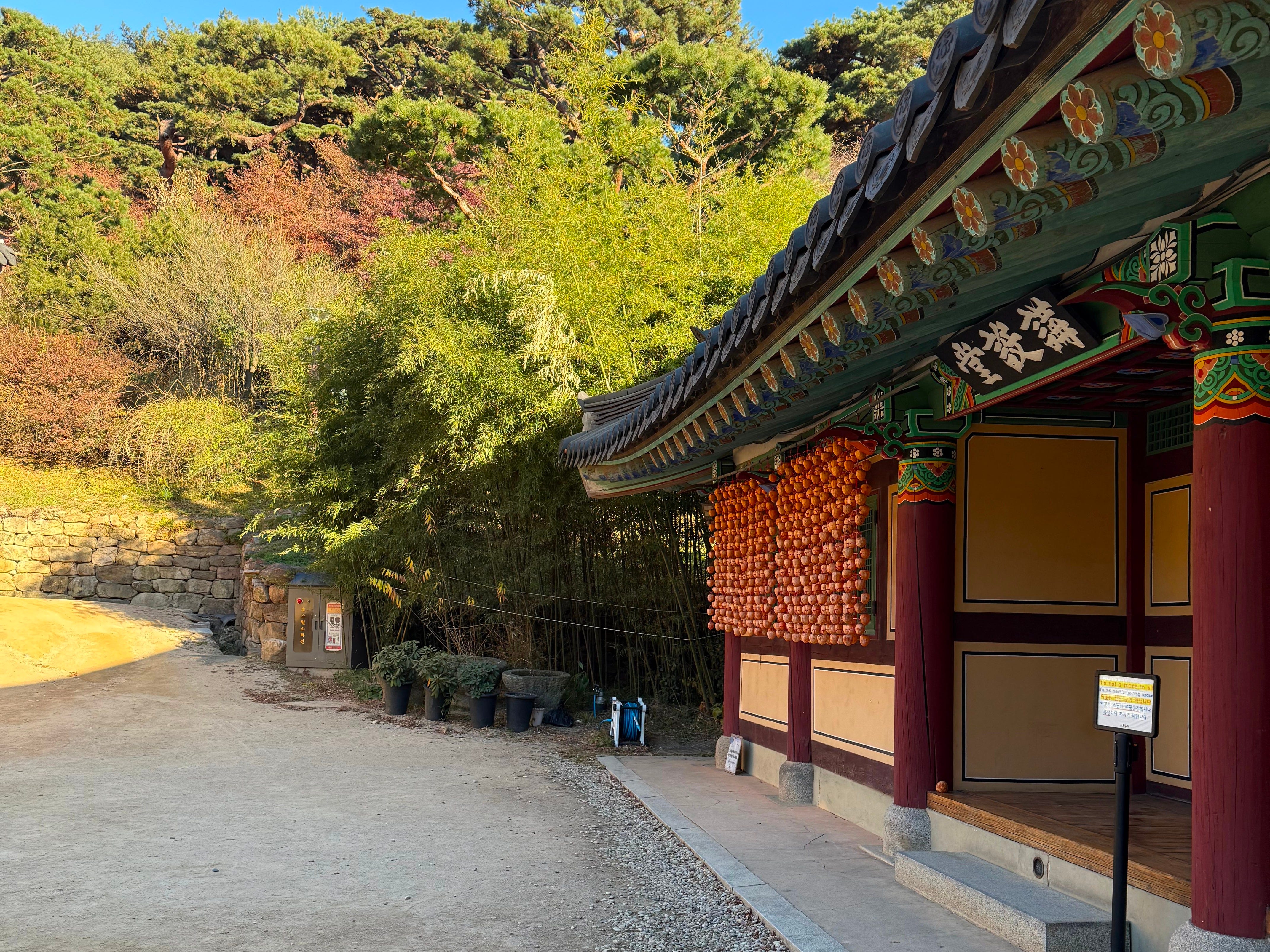
Here’s the reality: I’m working for room and board because I have nowhere else to go and no other way to survive. I feel like suffocating whenever I go down the mountain. Full of memories and remorse.
This isn’t a gap year finding myself experience. This isn’t a spiritual retreat I chose. This is employment because I was desperate and this job came with housing.
What I do:
Temple stay coordination
Answering phones, booking reservations
Giving English tours to foreigners and Korean participants
Cleaning guest rooms
Managing spreadsheets
Laundry. So much fucking laundry.
What I make: Enough to save a little. Enough to pay my phone bill. Enough to start building toward independence. Not enough to move out. Not enough to be truly independent. Not yet.
What it provides:
A room to sleep in
Meals every day
Structure when I’m falling apart
A reason to get up at 4 AM
Something to put on my CV that isn’t a year-long gap
What it doesn’t provide:
Passion or purpose
Long-term career prospects
Enough money to build real independence quickly
The freedom to leave when I want
But it keeps me alive. Fed. Housed. And right now, that’s enough.
The Shame of Being Broke at 29
Here’s what nobody tells you about financial dependence in your late twenties:
The shame is crushing.
I should have savings by now. I should have career stability. I should be independent. I should have my shit together.
Instead, I’m 29 years old, working at a temple for room and board, with basically zero savings, no career trajectory, and no plan beyond “survive this month.”
I feel like a failure. Not just in relationships. At being an adult.
My peers are:
Buying apartments
Getting promotions
Building retirement funds
Planning weddings
Investing in their futures
And I’m counting the money I’ve saved working at a temple and feeling proud when I have enough for next month’s phone bill.
The shame of it. The absolute fucking shame.
Not ashamed about the temple work—that’s honest work, and I’m doing it well.
Shame that I’m 29 and starting from zero, or maybe below. Shame that I was dependent. Shame that I don’t have the financial foundation most people my age have built.
Making Decisions with Limited Resources
When you have no money, even small decisions become calculated risks:
Should I take a day off?
People with savings: “I need rest, I’ll take a personal day.”
Me: “If I take a day off, do I lose pay? Can I afford that? Or do I push through because I need every won I can save?”
Should I go to the doctor?
People with money: “I should get that checked out.”
Me: “Is this serious enough to spend money on? Or can I just tough it out and hope it resolves on its own?”
Should I buy this book I want to read?
People with disposable income: “Sure, treat yourself.”
Me: “That’s ₩15,000. That’s half a week of saved money. Is the book worth delaying financial independence by three days?”
Should I get coffee at a café?
Normal decision: “I could use the caffeine and change of scenery.”
My decision: “That’s ₩7,000. That’s real money. Make coffee at the temple. Don’t waste resources on non-essentials.”
Every small choice is a financial calculation. And it’s exhausting.
Building Independence from Zero
Here’s what building independence looks like when you start with nothing:
Month 1 (September/October):
Arrived at the temple with zero savings but debts
Started working for room and board
First paycheck: finally, money that’s MINE
Enough to feel like maybe I’m not completely helpless
Month 2 (November):
Still working, still saving
Every won feels like an achievement
Planning to take English certification exam for salary increase
Starting to think: maybe I can actually build something from this
Month 3 (December - now):
Small savings accumulating
Still not enough to move out
Still not enough for real independence
But more than I had in August: zero
The goal:
Save enough to have options
Get English certification → higher salary
Keep building until I can afford: therapy, my own place, actual independence
Eventually: design school? (Sweden? Canada? Italy? Who knows. Can’t think that far ahead yet.)
The reality:
This will take time
I’m building from absolute zero
Every small amount saved is progress
Independence is measured in tiny increments
But I’m building. Slowly. From nothing.
The Financial Freedom I Don’t Have Yet (But Am Working Toward)
Right now, I can’t:
Afford my own apartment
Pay for therapy
Leave this job even if I wanted to
Make big decisions about my future
Take financial risks
Have real freedom of choice
But I’m working toward:
Enough savings to have options
Enough income to be independent
Enough security to make choices based on what I want, not just what I can afford
Enough stability to plan for a future beyond survival
I don’t know when I’ll get there. Maybe six months. Maybe a year. Maybe longer.
But every day I work, every won I save, I’m one tiny step closer to actual independence.
Career Pivoting While Grieving (Or: How to Build a Future When You Can Barely Function in the Present)
People ask: “What’s your plan? What’s next? What about your career?”
And I want to scream: I’m just trying to survive today. I can’t think about career trajectories when I’m still crying during evening prayers.
But I have to think about it. Because time doesn’t stop. Because I can’t work at a temple forever. Because I need to build toward something.
So here’s what “career pivoting while grieving” actually looks like:
The dream:
Design school
Spatial design and branding
Working internationally
Building something meaningful
The reality:
Can’t afford design school yet
Can’t even think clearly enough to research programs
Need to save money first
Need to heal enough to function first
Need to survive first, dream later
The compromise:
Work at temple (provides housing, saves money)
Take English certification exam (increases earning potential)
Research design schools when brain isn’t completely occupied by grief
Build skills where I can (coordination, event management, public speaking)
Accept that career building happens slowly when you’re also rebuilding yourself
I’m not passionate about temple coordination. It’s not my calling. It’s not my dream career.
But it’s what I can do right now. And it’s building toward something. Even if that something is still unclear.
The Privilege and the Desperation
Here’s the complicated truth:
I’m privileged to have this option. Many people don’t have access to temple work. Don’t have parents to fall back on. Don’t speak English well enough to coordinate international temple stays.
And I’m desperate. I took this job because I had no other options. Because I needed housing immediately. Because I was broke and broken and had nowhere else to go.
Both things are true. I’m lucky to have this escape route. And I’m desperate enough to need it.
The privilege doesn’t make the desperation less real. The desperation doesn’t make the privilege disappear.
I’m grateful for what I have. And exhausted by what I’ve lost. And working as hard as I can to build something from the wreckage.
What Nobody Tells You About Starting Over
When you have to rebuild your life from zero, here’s what you learn:
Progress is measured in tiny increments. Saving ₩10,000 feels like victory. Getting one paycheck feels like achievement. Having enough for phone bill feels like stability.
Independence is expensive. You don’t realize how much financial dependence was supporting you until it’s gone and you’re counting every won.
Survival mode is exhausting. Making every decision based on financial necessity. Never having the luxury of choosing based on desire. It wears you down.
Building takes longer than falling. The relationship ended in one conversation. Financial independence will take months, maybe years.
Small victories matter. First paycheck. First month of savings. First bill paid by myself. Each one is proof: you’re building something.
You can be grateful and struggling simultaneously. Grateful for temple housing. Struggling with no real independence. Both are true.
The shame is real but shouldn’t be. Being broke at 29 feels like failure. But starting over after crisis takes courage, not stupidity.
For Anyone Else Starting From Zero
If you’re reading this because you’re also broke, heartbroken, and trying to figure out how to survive:
First: Assess what you actually have.
Housing options? (Parents? Friends? Work-exchange programs?)
Skills that can get you work immediately? (Even if it's not your dream job)
Support systems? (Even imperfect ones)
Any privilege you can leverage? (Education? Language skills? Access to resources?)
Second: Survival first, dreams later.
Get housed. Get fed. Get stable.
Take work that provides necessities, even if it’s not your passion
Build foundation before building future
Third: Make peace with starting over.
You’re not failing at life because you’re starting from zero
Building from nothing takes time
Small progress is still progress
Every won saved is one more than you had
Fourth: Accept help where it’s available.
This isn’t the time for pride
If someone offers housing, take it
If there’s work that provides room and board, take it
You can build independence later; survive now
Fifth: Recognise your privileges and use them.
If you have education, use it
If you have language skills, leverage them
If you have family who can help, accept it
Privilege isn’t shameful; not using it when desperate is just stupid
The path from zero to independence is long. But it’s possible. One small paycheck at a time. One month of savings at a time. One decision at a time.
You’re not failing. You’re rebuilding. And rebuilding takes time.
The View From Here
I’m writing this during my break at work. In a few minutes, I’ll go back to coordinating temple stays, answering phones, doing laundry.
It’s not glamorous. It’s not my dream. It’s not what I imagined for my life at 29.
But it’s keeping me alive. Housed. Fed. And slowly, very slowly, building toward independence.
I have more money now than I did on August 27th: zero.
I have more options now than I did then: none.
I have more independence now than I did then: complete dependence.
I have a clearer mind now than ever: maybe the first time in a year.
The progress is small. But it’s real.
And someday—maybe six months from now, maybe a year, maybe longer—I’ll have saved enough to make real choices. To afford therapy. To apply for design school. To live somewhere I choose, not just somewhere that takes me.
Someday I’ll have financial independence. Not just survival.
But today? Today I’m just grateful I have a room to sleep in. Meals to eat. Work that provides both. And a tiny amount of money that’s mine, that I earned, that I’m building with.
It’s not much. But it’s more than zero.
And when you start from zero, more than zero feels like everything.
These letters from the temple are how I’m learning that building a life from nothing doesn’t happen in inspiring montages—it happens in tiny increments, one saved won at a time.
Next week: Still figuring out what needs to be written
Building from zero (one day at a time),
Suinny
If you’re starting over with no money:
Crisis Text Line: Text HOME to 741741
National Suicide Prevention Lifeline: 988
Find work-exchange programs: Workaway.info, WWOOF, HelpX
Temple volunteer opportunities: Various Buddhist temples offer room/board
Free financial planning resources: r/povertyfinance
Starting from zero isn’t failure. It’s just your starting point. Every small amount saved is progress. Every day you survive is victory. You’re not failing at life. You’re rebuilding it. And that takes time. Be patient with yourself. You’re doing better than you think.