

Dear fellow travellers,
I need to shatter an illusion: Buddhist temples are not peaceful sanctuaries where enlightened beings float around radiating wisdom whilst you meditate your problems away.
They’re workplaces. Full of gossip, politics, petty grievances, and very human monks who will absolutely call you out for leaving your shoes crooked.
And weirdly, that’s exactly what’s saving me.
I came here seeking spiritual healing, Buddhist wisdom, and perhaps some Instagram-worthy moments of transcendence at sunrise. What I got instead was a job. A real job. With a boss who criticises my posture, coworkers who gossip, and responsibilities that have absolutely nothing to do with processing my breakup.
And it turns out that’s precisely what I needed.
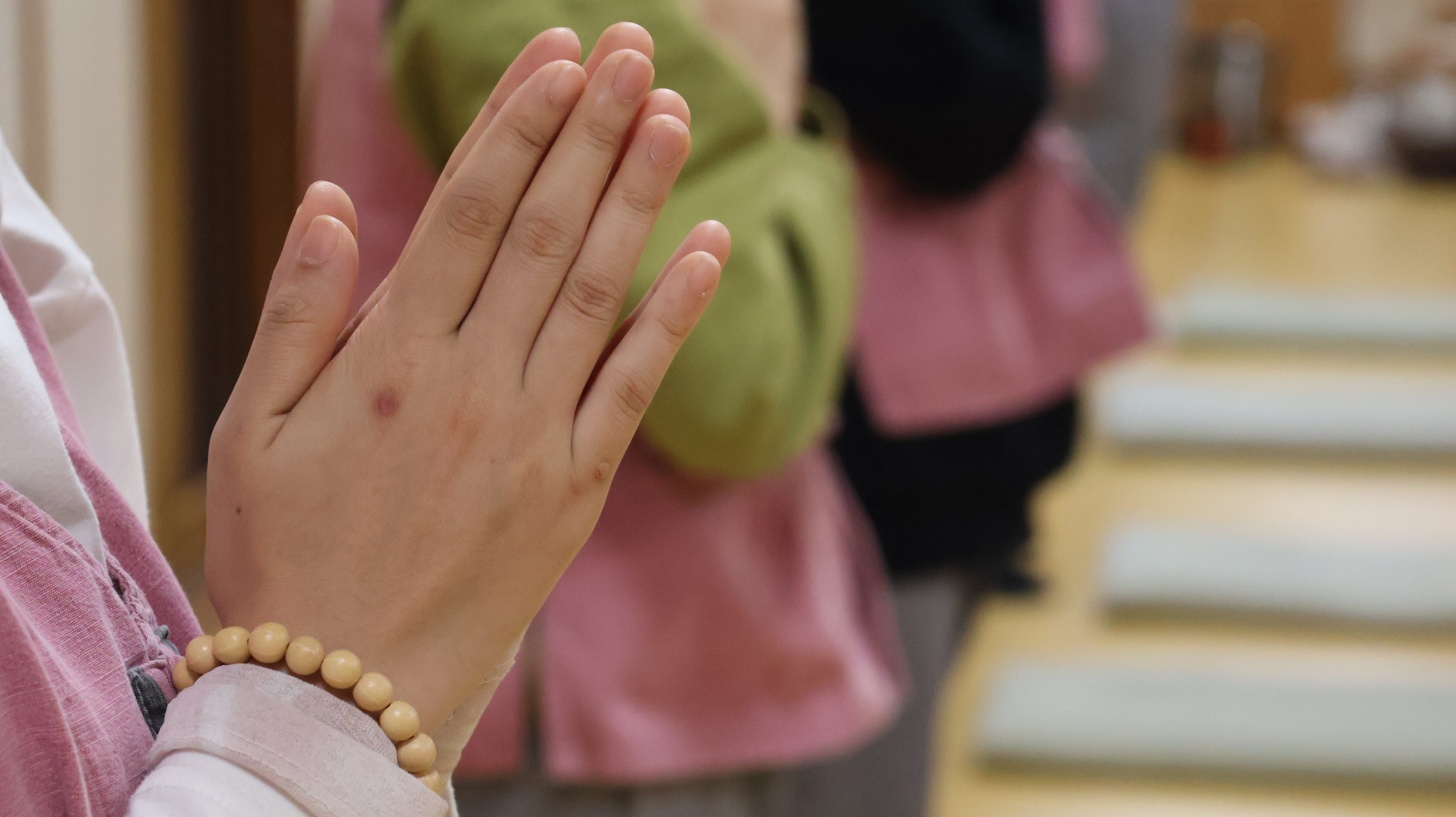
The Romanticisation vs. The Reality
Here’s what I imagined temple life would be:
Serene meditation sessions where clarity descends like morning mist
Wise monks offering perfectly-timed insights about impermanence
Peaceful manual labour that becomes moving meditation
A gentle, supportive community helping me heal
Time and space to process my emotions surrounded by sacred energy
Here’s what temple life actually is:
Waking up at 4 AM whether you want to or not because bells don’t care about your feelings
A monk who keeps track of every small mistake you make and points them out publicly
Laypeople gossiping about the new 29-year-old worker within hours of arrival
Giving English tours to twenty-two foreigners when you’ve been here for four days
Scrubbing toilets, answering phones, and dealing with entitled temple stay guests
So much fucking laundry
And here’s the thing: the unglamorous reality is what’s actually helping.
The Monk Who Won’t Let Me Get Away With Anything
When I was at Yeongrangsa, there was a monk who had appointed himself my personal correction officer.
Nothing gets past him. Nothing.
My rubber shoes weren’t aligned properly? He notices. My umbrella wasn’t folded perfectly? Called out. I spoke too casually to a laywoman? Correction. I walked too quickly through the courtyard? “You’re being careless with your energy.”
At first, I thought: “I came here to heal from heartbreak, and you’re criticising my shoe placement?”
But here’s what Monk Aseong actually said: “In a temple, everyone is refined. Your small mistakes show. They become flaws. You must be precise in small things if you want to be trusted with larger things.”
And as much as I wanted to roll my eyes, he’s not wrong.
When you’re falling apart emotionally, you can’t trust yourself to do the big things—like process trauma or make good decisions. But you CAN align your shoes properly. You CAN fold your umbrella neatly. You CAN walk through the courtyard with intention.
Those small acts of precision are like training wheels for your life. They give you proof that you can still show up, still do things correctly, still be trusted—even when everything inside you is chaos.
Monk Aseong isn’t teaching me Buddhism. He’s teaching me that I’m capable of showing up and doing things right, even when I feel broken.
And I hate how much that’s helping.
The Temple Gossip Network (It’s Faster Than You Think)
On the day of my job interview at this temple, I was walking through the grounds when I overheard someone on a cart, on the phone, driving past:
“28 years old? They said 29 years old, working here now...”
I’d been there less than two hours. The temple gossip network had already clocked me, assessed me, and was discussing me.
Welcome to spiritual community: where everyone is theoretically practising non-judgment and actually everyone is watching everything.
The People Who Tried to Prepare Me
Monk Aseong and the kitchen laywoman weren’t being judgmental or nosy. Looking back, they were trying to save me from myself.
They sat me down early on with warnings I thought were excessive:
“You need to be careful how you sit. Legs crossed like that—you sit like a grandpa. It’s not respectful here.”
“Watch how you speak. Learn to bow properly. This is traditional Korean temple culture. You’ve lived abroad too long—you’re not careful enough with your actions.”
“Don’t talk about your condition. Don’t talk about yourself too much. People here gossip, and anything you share will become a story. Try not to show yourself too much—people will get jealous.”
At first, I thought they were being ridiculous. Too traditional. Too conservative. Too controlling.
But after working here for a month: they were absol-fucking-utely right.
They weren’t trying to control me. They were trying to protect me. Because they understood something I didn’t: in a tight-knit community where everyone is watching, your small mistakes don’t just reflect on you—they become everyone’s business.
The way I sat could have matter. The way I spoke could have been noticed. The things I casually mentioned could have become gossip. And the visibility of being the new worker with some language skills did create jealousy.
They were preparing me for survival in a conservative, traditional environment where I’d be under constant observation.
And here’s the thing: that constant observation—annoying as it is—creates accountability. It creates structure. It means I can’t just disappear into my depression. I can’t stay in bed all day spiralling. I have to show up, sit properly, speak respectfully, and participate in community life because people will notice if I don’t.
Sacred community isn’t always gentle and supportive. Sometimes it’s strict and traditional and uncomfortably watchful. And sometimes that’s exactly what keeps you functional.
The Monks Who Aren’t Enlightened (And Why That Helps)
Let me tell you about the monks who smoke.
Yes. Monks. Who smoke cigarettes.
I saw one behind the meditation hall one evening, sneaking a smoke like a teenager behind the gym. Some of them smoke inside their bathrooms. And I felt this weird mix of judgment and relief.
Judgment because: aren’t you supposed to be maintaining purity? Isn’t that the whole point?
Relief because: oh thank god, nobody here is actually perfect.
There’s a monk who drinks. There’s a monk who gossips more than the laypeople. There’s a monk who loses his temper at workers. There’s a monk who’s clearly struggling with something he won’t name.
And at first, I thought: “What kind of spiritual community is this? These people are supposed to be examples.”
But then I understood: If the monks were perfect, I’d never believe I could heal here. Their flaws make this place survivable.
Because if even the people who’ve dedicated their entire lives to spiritual practice still struggle, still make mistakes, still have vices and tempers and human weaknesses—then I’m allowed to struggle too.
I don’t have to be perfect to be here. I don’t have to be healed to be worthy of healing. I just have to show up as I am, flaws and all.
The imperfect monks taught me that better than any dharma talk could.
Structure As Medicine (When Your Brain Is a Hurricane)
Here’s what my day looks like at the temple:
4:00 AM - Temple bells ring. Wake up whether I want to or not.
4:30 AM - Dawn prayers. Show up even if I’m exhausted.
5:15 AM - Come back to my room, get ready for work.
6:00 AM - Breakfast. Eat with others or sometimes alone.
8:30 AM - Start work. Temple stay coordination, answering phones, and laundries.
12:00 PM - Lunch. Communal meal, no skipping.
12:30 PM - Back to work. Admin tasks, guest management, and cleaning. Get ready for chaos. People coming in, helping them check in, and giving tours.
5:00 PM - Dinner. Another communal meal.
6:10 PM - Evening prayers. Show up even when I don’t feel it.
7:00 PM - Personal time (journaling, reading, collapsing).
9:00 PM - Sleep. Ready to do it again tomorrow.
This schedule is rigid. Unforgiving. Non-negotiable.
And it’s the only reason I’m still functional.
When you’re heartbroken, when you have BPD, when your internal world is complete chaos—having zero control over your daily structure is a gift.
I don’t have to decide whether to get up. The bells decide for me.
I don’t have to decide whether to eat. Meal times decide for me.
I don’t have to decide whether to isolate. Community obligations decide for me.
Every decision I don’t have to make is one less opportunity to choose wrong.
Back home, I could stay in bed all day. Skip meals. Avoid people. Spiral into rumination because nothing was forcing me to engage with life.
Here, I can’t. The structure won’t allow it.
And on days when I have no motivation, when I want to give up, when I’m so depressed I can barely move—the routine carries me anyway.
I don’t have to want to show up. I don’t have to feel motivated. I don’t have to be “ready.”
I just have to follow the schedule. And somehow, that’s enough.
How Routine Saves You When Motivation Fails
Motivation is bullshit.
There. I said it.
Motivation is what you need when you’re doing something optional. But healing isn’t optional. Living isn’t optional. And waiting for motivation to strike before you engage with life is a recipe for staying stuck.
Here’s what I’ve learned: Routine doesn’t care about your motivation. It just keeps going.
Some mornings I wake up at 4 AM and think: “I can’t do this. I’m too tired. I’m too sad. I miss her too much. I can’t possibly show up today.”
And then the bells ring. And I get up anyway.
Not because I’m motivated. Not because I’m strong. Not because I’ve had some breakthrough.
Because the schedule doesn’t stop just because I’m having a hard day.
I go to dawn prayers. I eat breakfast. I go to work. I answer phones. I give tours. I scrub floors. I attend evening prayers.
And by the end of the day, I’ve somehow survived. Not because I wanted to. Not because I was motivated.
Because the routine pulled me through.
That’s what people don’t tell you about healing: showing up is 90% of the work. And routine makes showing up non-optional.
You don’t have to feel like doing it. You just have to do it.
The Unexpected Skills I’m Learning (That Have Nothing to Do With Enlightenment)
When I came here, I thought I’d learn about meditation, mindfulness, letting go, impermanence—all the spiritual stuff.
Instead, I’m learning:
Customer service for difficult temple stay guests. The foreign guests complained about the early mealtime. The business executive who complained about his fault of taking the wrong route of public transportation coming here—blamed it on us. The woman who asked if we could arrange a talk with a monk for her troublesome child with an impossible schedule.
Event coordination. Managing temple stay programmes, scheduling tours, organising ceremonies. Making sure twenty-two foreigners don’t accidentally walk through a restricted area during prayers.
Conflict resolution with absolutely no training. When the kitchen staffs complain about guests showing up late for breakfast, even though we clearly informed them they should be there on time. When a monk snaps at us over small things. When temple politics threaten to derail an entire event.
Public speaking in my third language. Giving English tours about Buddhist practices in terms I barely understand myself. Explaining Korean temple etiquette to Americans who’ve never removed their shoes indoors.
Patience with people I want to strangle. The coworker who thinks I should figure out what to do with ‘Nun-chi (눈치)’ instead of telling me what to do in my first month. The monk who criticises every tiny thing. The guest who treats me like hotel staff.
Administrative work that’s mind-numbingly boring. Answering phones. Booking reservations. Managing spreadsheets. Responding to emails about temple stay policies. Cleaning rooms.
None of this is spiritual. None of this is healing work in the traditional sense.
But all of it is teaching me: I’m capable. I can handle difficult situations. I can show up professionally even when I’m falling apart internally. I can be trusted with responsibility.
These unglamorous skills are rebuilding my self-worth more than any meditation session ever could.
The Lesson Nobody Warns You About
Here’s what I wish someone had told me before I came to a temple seeking healing:
Enlightenment doesn’t fix you. But having to show up for work does.
The deep spiritual wisdom is nice. The meditation helps sometimes. The Buddhist teachings about impermanence and non-attachment are valuable.
But you know what’s actually keeping me alive? Having to answer the phone. Having to give a tour. Having to show up because people are depending on me.
When I wake up at 4 AM and my first thought is “I can’t do this today,” you know what gets me out of bed?
Not Buddhist philosophy.
The knowledge that if I don’t show up, someone else has to cover my shift. That guests are arriving and expecting a coordinator. That the Head Monk will notice and comment if I skip dawn prayers.
Responsibility—unglamorous, annoying, non-spiritual responsibility—is what’s saving me.
Not because it’s healing my heart. Not because it’s making me feel better.
Because it’s forcing me to participate in life anyway. And participation, even reluctant participation, is the opposite of giving up.
The Sacred in the Mundane
There’s a monk here—one of the older ones—who spends most of his time in the kitchen garden.
I asked him once, “Don’t you meditate? Don’t you practice?”
He smiled and said, “Every carrot is practice. Every weed is meditation. The sacred doesn’t only live in the meditation hall.”
At the time, I thought that was beautiful but ultimately kind of bullshit.
Now I’m starting to understand.
The sacred isn’t just in the 108 prostrations. It’s in showing up to answer the phone even when you’re crying. It’s in giving a tour professionally even though your heart is broken. It’s in folding your umbrella neatly even when everything feels pointless.
The mundane tasks—the ones that have nothing to do with Buddhism or healing—are teaching me that life continues requiring things of you even when you’re falling apart. And meeting those requirements, even minimally, is a form of healing.
You’re proving to yourself: I can still function. I can still be counted on. I can still do things right.
That’s not enlightenment. But it’s survival. And right now, survival is enough.
What Temple Work Has Actually Taught Me
Not Buddhist philosophy. Not meditation techniques. Not spiritual transcendence.
But this:
You don’t have to be healed to be functional.
You don’t have to feel motivated to show up.
You don’t have to be perfect to be valuable.
Sacred spaces are full of flawed humans, and that’s okay.
Structure saves you when motivation fails.
Routine is more powerful than inspiration.
Boring, unglamorous work can rebuild your self-worth.
Being needed gives you a reason to keep going.
Small acts of precision matter when your world is chaos.
The sacred lives in the mundane as much as the mystical.
Nobody here is enlightened. Everyone here is just showing up. And that’s enough.
For Anyone Seeking Refuge
If you’re thinking about going to a temple, a monastery, a spiritual community—hoping to find peace and healing and wisdom:
You might. But that’s not what will save you.
What will save you is the 4 AM wake-up call that doesn’t care about your feelings. The job responsibilities that force you to engage. The imperfect humans who remind you that struggle is universal. The routine that carries you through days when you have no strength left.
Don’t go seeking enlightenment. Go seeking structure.
Don’t expect wise monks who have it all figured out. Expect flawed humans who are also just trying to show up each day.
Don’t wait for healing to feel motivated. Let routine make motivation irrelevant.
And don’t underestimate the healing power of having to scrub toilets, answer phones, and fold your umbrella properly.
The mundane might save you more than the mystical ever could.
The View From Here
I’m writing this during my lunch break, between coordinating a temple stay programme and giving an afternoon tour to visitors from Canada.
My heart still hurts. I still miss her. I still cry during prayers sometimes. I’m still heartbroken.
But I’m also working. Functioning. Showing up. Keeping myself busy.
Not because I’m healed. Not because I’m enlightened. Not because I’ve processed my grief and found peace.
Because the schedule says it’s 1 PM and there’s work to do and someone is depending on me.
And weirdly, that’s enough to keep going.
The temple bells will ring tomorrow at 4 AM. Someone will criticise something about my posture. The laywoman will gossip about something. Guests will arrive with ridiculous requests. The schedule will continue, indifferent of my emotional state.
And I’ll show up. Not because I want to. Because that’s what the routine demands.
And somehow, one unglamorous day at a time, that’s building something.
Not enlightenment. Not transcendence. Not spiritual awakening.
Just proof that I can still function. Still be counted on. Still be here.
And right now, that’s the most sacred thing I could learn.
These letters from the temple are how I’m learning that healing doesn’t always come from meditation cushions—sometimes it comes from having to show up and answer the phone.
Next week: ...still thinking what to write
Still showing up (even when I don’t want to),
Suinny
If you’re struggling and need structure when everything feels chaotic:
Crisis Text Line: Text HOME to 741741
National Suicide Prevention Lifeline: 988
Workaway/WWOOF: Exchange work for room and board worldwide
You don’t have to be healed to be functional. You don’t have to feel motivated to show up. Sometimes the most sacred thing you can do is just fold your umbrella properly and keep going.