

Dear fellow travellers,
I’m writing this from a café at Seoul’s Express Bus Terminal, halfway between the temple and a seminar that doesn’t really matter. Around me, people rush past with that distinctive urgency of travellers—late, anxious, clutching tickets to somewhere else.
I’ve been here before. Many times, actually. Met my former tutee here. Said hello and goodbye to friends here. And yes—countless meetings with her, back when “us” was still a word that meant something.
The terminal hasn’t changed. Same platforms, same café, same announcements echoing through the halls. But the people who once stood beside me have all moved on to different destinations.
Sitting here with my coffee getting cold, something shifted. A realisation that’s been trying to surface for weeks finally broke through.
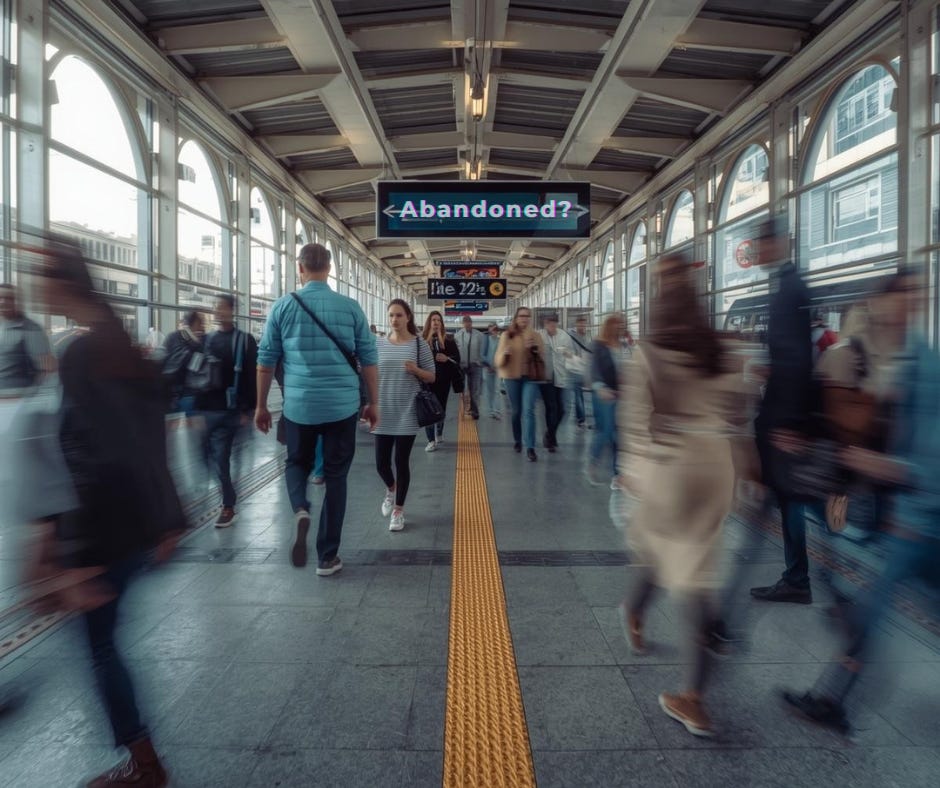
The Word That’s Been Destroying Me
For months, my BPD brain has been screaming one word on repeat: abandoned.
She abandoned me.
My parents had abandoned me.
Anyone could and will abandon me.
Because apparently, I’m the kind of person who gets left behind. Who isn’t worth keeping. Whose value someone recognises and then decides isn’t enough.
I’ve spent weeks at this temple trying to let go of her, trying to become someone “better,” trying to fix whatever made me so easy to discard. The 4:00 am bells, the 108 prostrations, the endless dharma readings—all of it aimed at transforming myself into someone no one would ever abandon again.
Except I’ve been asking the wrong question entirely.
What Terminals Taught Me
Watching people rush past to catch their buses, something clicked.
Do we ever say someone “abandoned” a tree?
The trees lining the mountain paths near my temple provide shade to whoever passes beneath them. Shelter from rain. A resting place for the occasional temple cats. People stop, take photos, and maybe rest for a bit. Then they move on.
The tree doesn’t feel abandoned.
Same with this terminal. Thousands of people pass through here daily. Some stay for hours. Others just rush through on their way to somewhere more important. The terminal provides what it can—shelter, connection, a transition space between journeys.
Then people board their buses and leave.
And the terminal simply... remains. Fulfilling its purpose through the act of existing.
The Shift That Changes Everything
Here’s what finally made sense, sitting among strangers going everywhere and nowhere:
I’m not anyone’s property. Therefore, no one can abandon me.
It’s not that connections don’t matter—they matter enormously. But the entire framing was wrong. I’ve been thinking of myself as something to be kept or discarded, owned or thrown away.
But I’m not luggage left on a platform.
I’m the platform itself.
We were each other’s stations. A place to rest, to refuel, to find shelter during a particular phase of the journey. She found what she needed—stability I couldn’t provide then. I found what I needed—discovering I could exist independently, without wrapping my entire identity around being chosen by her.
Our connection ran its course. That’s not abandonment. That’s just the natural end of shared time.
What This Actually Looks Like
This realisation doesn’t make the grief disappear. I still miss her. The cooler weather reminds me of her perfume mixing with the scent of her coat. I still catch myself wanting to share things with her—this café, that sunset, the way the mountain fog looked this morning.
But the nature of the pain has shifted.
Instead of: “Why did she abandon me?” (which makes me the problem, the broken thing, the not-enough person)
I can ask: “What was this connection teaching me? What purpose did our time together serve?”
One question destroys me. The other teaches me.
She needed to move on to a destination I couldn’t help her reach. I needed to learn I’m not defined by being chosen. Both things can be true simultaneously.
Buddhist Stations
The monks talk about impermanence constantly, and I think I finally understand what they mean.
Impermanence doesn’t make the pain stop. It repositions it.
Everything changes. The thing I wanted to stay the same forever changed overnight. That’s not a personal failing—it’s just how time works. The date that became a grief day might someday become just… a day.
The mountains around my temple have stood for centuries. Dynasties rose and fell. Wars came and went. Countless people walked these paths, found shelter in these halls, rang these same bells, then continued their journeys elsewhere.
Were the mountains abandoned?
Or did they simply continue being mountains?
Maybe I can do the same.
Learning to Be a Station
So here’s what I’m practising instead of catastrophising about abandonment:
Exist with intention. The terminal doesn’t randomly offer services. It has clear purposes: shelter, connection, transition. I’m learning what I genuinely offer—honesty about the mess of healing, someone who’ll laugh at the darkness instead of pretending it isn’t there, a willingness to sit with uncomfortable truths.
Remain available without chasing. When someone’s bus comes, the terminal doesn’t run after them, begging them to stay longer. It simply remains. Ready for the next arrival. This is the hardest part for my BPD brain, but I’m practising it daily through these temple routines.
Find meaning in the passing through, not just the staying. Some of my most important teachers stayed in my life for a single conversation. Some connections that felt permanent ended suddenly. Both mattered. Both served their purpose.
Trust that the right people will find their way here when they need to. The terminal doesn’t advertise itself to every passing traveller. It exists, and those who need what it offers will arrive.
The Empty Space Beside Me
Day after tomorrow I’ll take the bus back to the temple, past those highway signs we used to shout together: “Paltan, Ujeong, Joam!” The roads remain the same. The rest stops haven’t moved.
Only I’m different.
Not abandoned. Not discarded. Not left behind.
Just a station—one specific, imperfect place where certain travellers might find exactly what they need, for exactly as long as they need it.
And then they’ll go. And I’ll remain.
Not destroyed by their leaving. Just... here. Solid. Available. Purposeful.
The kitchen laywoman who drove me to the sea when she saw I’d been crying—she gets this. “You can’t control who stays,” she told me whilst watching the sunset. “You can only control how present you are whilst they’re here.”
She’s right. And maybe that’s enough.
For Fellow BPD Travellers
If your entire sense of worth comes from being kept, chosen, held onto—this shift feels terrifying. I know because I’m still in the middle of it.
It’s easier to blame yourself for being “too much” than to accept that sometimes connections simply reach their natural terminus. But here’s what I’m discovering through the daily grind of temple life:
Being a station is actually more stable than being someone’s possession.
Possessions can be discarded. Stations just... are. They serve their purpose whether anyone’s currently using them or not.
The temple bells ring at 4 am regardless of whether I’m drowning or floating. The mountains stand whether I’m heartbroken or healing. And I can learn to exist with that same steady presence.
Not perfectly. Not without tears. But honestly.
The Practice of Being a Station
It’s been nearly four months since August 27th. Some days, I manage this station mindset for hours. Other days, I collapse back into “abandoned” thinking and spend my lunch break spiralling.
Both are okay. Both are part of the process.
The monks keep reminding me that enlightenment isn’t a destination—it’s showing up for practice even when you don’t feel enlightened. Even when you feel like a complete mess who’s getting everything wrong.
So tomorrow: 4:00 am bells. Temple cleaning. Writing these letters. Practising being a station even when every cell screams to chase after buses that have already left.
The mountains weren’t abandoned when those people left. They simply continued being mountains.
Maybe I can do the same. Continue being a station—one specific, imperfect, honest place where certain travellers might find exactly what they need, for exactly as long as they need it.
And then they’ll go. And I’ll remain.
Not abandoned. Just... here. Solid. Available. Purposeful.
Isn’t that enough?
From a café table at the terminal, where everyone is leaving, and I am learning to stay
Emotionally yours (learning to exist without chasing),
Suinny
P.S. - When Abandonment Thinking Spirals
If you recognise yourself in the catastrophic “everyone will abandon me” thinking—especially those of us with BPD or attachment trauma—please know you’re not broken. Your brain is doing exactly what it was trained to do by past experiences.
But that doesn’t mean you have to believe everything it tells you.
Resources that are actually helping me:
DBT Skills Training (specifically: Radical Acceptance, Opposite Action)
Temple routine (structure when the internal world is chaos)
Honest conversations with a therapist about the difference between processing and ruminating
This community—your messages remind me I’m not alone in this
Next week: “The Weight of Prayers I Don’t Believe In Yet” — what happens when you kneel before Buddha but your heart is still kneeling before someone else